Kemker Kultuur
Kemker Kultuur
Jan Kemker & Nicole Marzec
Münsterland, Germany
Scroll down to see the beer, cider and fruit wines.
Kemker Kultuur is located on a farm in the village of Alverskirchen, 10 kilometres from Münster in western Germany. Jan and Nicole make beer, cider and fruit wines here in a converted barn, cultivating 4.5 ha of orchards along with meadows and arable land, and working with a trusted network of farmers and neighbours. Jan began making beer in 2017, introducing cider and fruit wines a year later. In 2019 he was joined by Nicole, who became a fundamental part of Kemker Kultuur as Jan’s partner in both life and work.
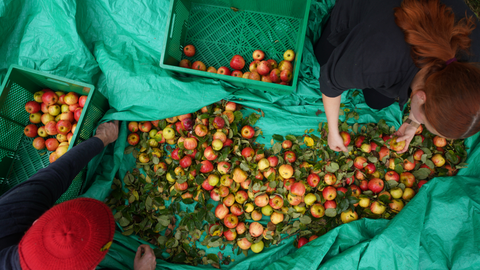
The cider and fruit wines are made with an assortment of local fruit, including apples, quinces and mirabelle plums, picked and sorted by hand to ensure only the highest quality reaches the press. Local microflora are occasionally used to encourage fermentation, such as elderflowers which are well-stocked with natural yeast.
The beers range between sour, bitter and herbal depending on the recipe, with many aged for lengthy periods in wooden barrels and finished with fruit or herbs — the latter a typical feature of Munsterland beer.
All of the grains are locally and organically grown and the majority need to be malted; a multi-stage process that spans thousands of years of brewing history. It begins in the field, with the harvest of barley, wheat, spelt, oats and rye. Where some regions are limited to a certain style of beer by the grains grown there, Jan and Nicole work with a diverse range that showcase the local agriculture.
For malting, water awakens the dormant seeds and after around five days of sprouting, two days of drying halts the process. The malt is crushed and combined with hot water, where the enzymes released during germination work with the grains’ starch to create a sugary liquid. In Jan’s words, the enzymes are having a pool party with the starch! This liquid, known as wort, is separated and the boiling process begins, with flavours carefully steered through the addition of hops, added early on for a more bitter influence, or towards the end of the boil for more aroma, creating layers of complexity within the beer.
Once cooled, a house culture, necessary after the pasteurisation which is a byproduct of boiling, is added to start fermentation in stainless steel, before transferring to old wooden barrels where maturing ranges anywhere from nine months to three years. At this point, the process overlaps with winemaking: the beer is racked from the barrels and selected fruit or herbs are added before bottling.
These are traditionally made beers and fruit wines with a wonderful depth of flavour, founded on locally grown, hand-picked fruit and grain, and inspired by a rich tapestry of agriculture and local history.
12 products